Can you clean spark plugs with brake cleaner? Yes, brake cleaner can clean spark plugs, removing surface dirt and light carbon buildup. However, it may leave residue and isn’t ideal for heavy contamination.
Spark plugs are essential parts of a vehicle’s engine. They start the combustion process by igniting the air-fuel mixture that powers the engine. In the combustion process itself, spark plugs can gather a lot of carbon, dirt, and other grime. This can impact their ability to do this job. Regular cleaning can make sure that spark plugs can perform this task efficiently. However, many car owners are unsure whether using brake cleaner is a good idea.
In this article, we will evaluate the pros and cons of using brake cleaner and other cleaning methods and explain how to clean spark plugs.
The Role of Spark Plugs in Your Vehicle
Spark plugs are one of the most important components of a vehicle’s engine. They are the ones that start the process of combustion in the engine’s cylinder. This is done by igniting the air-fuel mixture. This process creates the power needed for the vehicle to move. Like all essential components of a vehicle’s engine, spark plugs are also susceptible to the accumulation of carbon, dirt, and other substances.
This is a result of the combustion process itself that spark plugs aid. A spark plug that is ineffective can lead to poor fuel efficiency, misfires, and difficulty starting the vehicle.
The Importance of Cleaning Spark Plugs
Once spark plugs become soiled, they become ineffective. Cleaning spark plugs can help:
- Restore Functionality: Spark plugs enable the engine to fire in a sequential order. Misfiring can cause rough idling and delayed acceleration, all of which can be solved by cleaning spark plugs and restoring engine functionality
- Improve Miles Per Gallon: Spark plugs are essentially the first step in combustion. If a spark plug’s ignition is weak, one can expect poor combustion and, subsequently, poor fuel economy. Cleaning spark plugs can help solve this issue
- Extend the Life of the Spark Plugs: Spark plugs can be costly. Cleaning can significantly prolong the need for replacements and save one a lot of money.
What Is Brake Cleaner, and How Does It Work?
Brake cleaner is a solvent used to pinpoint and remove unwanted oils and dirt from specific automotive brake parts of the system, such as the rotors, pads, and calipers. When it comes to brake cleaners, there are two main categories:
- Chlorinated Brake Cleaners: These are based on chlorine and are effective, as they can remove oil and grease. On the other hand, they do pose a risk to the environment and one’s health, so they must be used while being properly ventilated or wearing a suit (to protect you).
- Non- Chlorinated Brake Cleaners: These contain less harmful and greener chemicals, making them a safer option when being used to clean automotive parts, including spark plugs.
You can buy brake cleaners in a spray can that is easy to use.
When it comes to suitability and efficiency, it changes depending on the different types of scorches and the residues built up on the spark plugs.
Can You Clean Spark Plugs with Brake Cleaner?
Although there are no laws that expressly forbid the cleaning of spark plugs with brake fluid, it should be known that it is not the best idea and may be unsafe. Here are the pros and cons of using brake fluid as a cleaning agent on your spark plugs.
Pros of Using Brake Cleaner to Clean Spark Plugs
Using brake fluid to clean a spark plug is as effective and advantageous as any other cleaning agent. Here are the upsides of using it to clean spark plugs.
- Effective Cleaning of Surface: Brake cleaning fluid can be used to clean grime, oil, grease, and other residues on the tip of the spark plug, as well as to clean the tips of the spark plug and lesser carbon particles that may seem to be obstructing the electrodes on the inside of the spark plug.
- Convenience: Using a spray can, you may clean a spark plug more quickly and easily than other methods, as you only have to point and spray to clean the spark plug.
- Saves Money: You may clean spark plugs using brake fluid, as it is less expensive than other cleaning fluids, and you may get it from any car accessories shop.
- Uses: You may use the fluid to clean other parts of the car as well as to clean other objects.
The cost of the truck still applies, whether it gets used or not. Why not let it do its job? Whether the work keeps coming in or not, the truck has to be paid for.
Cons of Cleaning Spark Plugs with Brake Cleaner
On the surface, cleaning spark plugs with brake cleaner looks like a reasonable thing to do, but there are drawbacks. Below are examples of why cleaning spark plugs with brake cleaner is not a good idea.
- Possibly Dangerous Residue: Spark plugs can potentially damage the performance of an engine due to residual contaminants. Residue plugs can prevent the spark plug from firing due to a residue from a brake cleaner that is chlorinated.
- Not Enough Cleaning: If a spark plug has a massive buildup of oil or carbon, there is a good chance that the brake cleaner won’t be enough to do the cleaning. Something much more thorough may be required to perform the tasks.
- Engine Damage: If brake cleaner is used, other parts of an engine can be damaged. Rubber seals or plastic parts can be corrupted if the cleaner drips onto them.
- Inhalation of Chemicals: The solvents used in the brake cleaner are very harsh and can be very strong if the air is breathed in. If brake cleaner must be used, strong gloves, goggles, and a mask may be required to prevent inhalation.
How to Clean Spark Plugs with Brake Cleaner
Cleaning your spark plugs with brake cleaner can be dangerous, and you can risk damaging your spark plugs if you don’t take the right precautions. Here’s the most effective and safest way to clean spark plugs using brake cleaner.
What You Will Need
- Non-Chlorinated Brake Cleaner
- Spark Plug Socket and Ratchet Wrench
- Wire Brush, or an Old Tooth Brush
- Clean Rag or Cloth
- Safety Goggles and Gloves
- Old toothbrush or Wire Brush
- Clean Rag or Cloth
- Ratchet Wrench and Spark Plug Socket
Step-by-Step Instructions
Cleaning spark plugs with brake cleaner requires extra caution and attention to detail. We will take each step to ensure your spark plugs can be cleaned easily and without any hassle.
- Switch off the Engine and let it cool: Before you take off any spark plugs, ensure the engine has cooled down. Handling a hot engine can cause serious burns or any number of injuries.
- Disconnect the Battery: To remove the spark plugs, for your own safety, make sure the battery for the car is disconnected so you can avoid any shocks.
- Remove the Spark Plugs: Grab your spark plug socket and ratchet wrench to remove your spark plugs from the engine. Be sure to keep them sorted so you can keep track of which ones are from which cylinder.
- Spray Brake Cleaner on the Spark Plug: From a distance of 6–12 inches, lightly spray the brake cleaner on the surface of the spark plug. Make sure to cover areas that have visible carbon buildup or dirt.
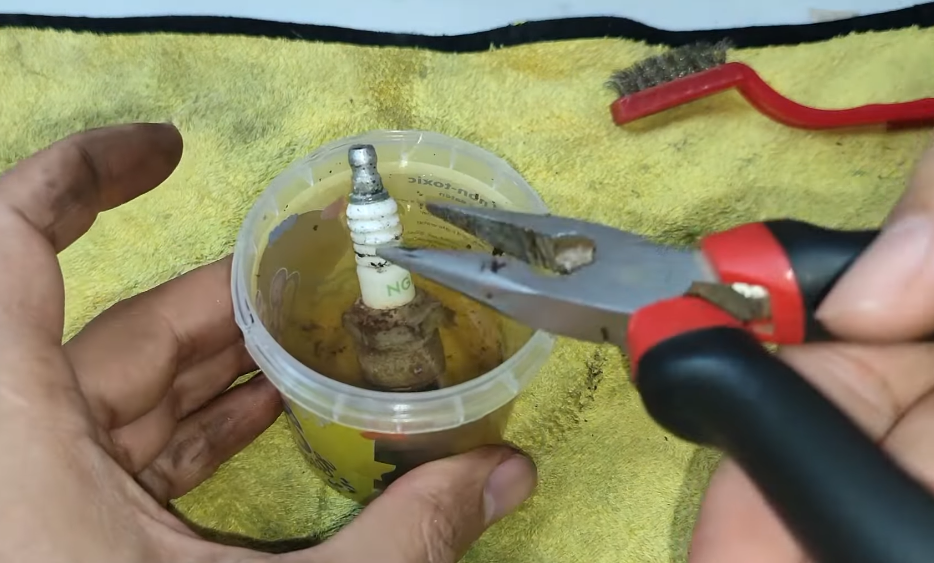
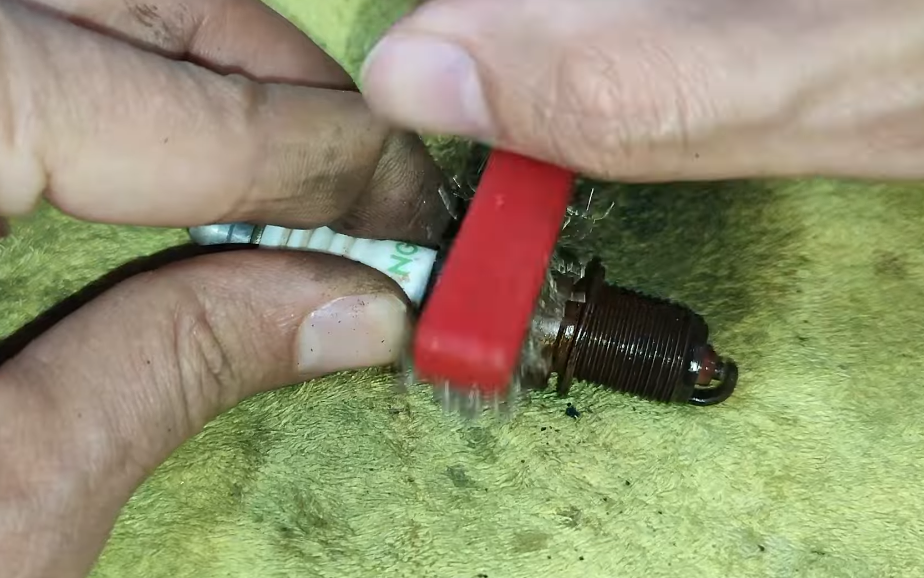
- Scrub the Spark Plug: With a wire brush or old toothbrush, gently scrub the spark plug. Pay special attention to the areas with carbon buildup. Be careful so as not to damage the spark plug’s delicate parts, which are made of ceramic and metal.
- Wipe the Spark Plug: After scrubbing, use a cloth to wipe off the brake cleaner and the spark plug. Make sure to clean the plug before you proceed.
- Allow the Spark Plug to Dry: After using a brake cleaner, to avoid any potential interference with the spark plug’s functioning and to avoid engine misfires, let the spark plug dry completely.
- Reinstall the Spark Plug: Once you are sure the spark plug is dry, put it back into the engine. Make sure to secure the spark plug to the engine’s specs, but don’t over-tighten it.
Best Alternatives to Brake Cleaner for Cleaning Spark Plugs
Although brake cleaner can be used, there are better and safer options for cleaning spark plugs.
- Spark Plug Cleaning Machines
These machines are very effective in cleaning spark plugs. They can use super tiny abrasive things or just compressed air. They can be a little pricey, but they are able to provide a professional-grade cleaning.
- Carbon Cleaning Fluids
These fluids are able to break down carbon buildup on spark plugs and other engine components. They act better than brake cleaner and are safer on the engine than brake cleaner.
- Ultrasonic Cleaner
This is a method that uses high-frequency sound waves that can remove a lot of contaminants and is super effective. Ultrasonic cleaning is great because it can clean spark plugs without damaging them. These can sometimes be used by professionals only, but are able to be used for home use sometimes.
4. Cleaning Spark Plugs with a Wire Brush
Clearing spark plugs can be done quite easily with a wire brush. This method is extremely cheap and requires no chemicals; therefore, it is an environmentally friendly option. However, it may not be effective against large deposits of contaminants on the plugs.
Mistakes to Avoid When Cleaning Spark Plugs
There are many mistakes car owners make when cleaning spark plugs to avoid when setting out to perform this task. Some mistakes are more serious than others, so be sure to keep an eye out so that you can achieve the best possible outcome.
1. Excess Use of Cleaner
Having too much brake cleaner on the plugs can lead to harmful residue being left behind that can alter and change the performance of the plug. So be sure to use just enough cleaner without making the plug excessively wet.
2. Ignoring Spark Plug Dryness
Having too much brake cleaner or any liquid residue that is left on the plug can cause misfires in the engine or cause malfunctions in the electrical systems of the engine. This is why it is extremely important that the spark plug is thoroughly dried before being placed back in the engine.
3. Excessive Scrubbing
While cleaning, it is important to avoid scrubbing the plug too aggressively. This risk damages the minor and more delicate components of the plugs, which can be made out of ceramic or metal that can make the plug much more effective.
Related Article
2 Stroke Spark Plug Color Chart
Spark Plug A7TC Cross Reference
RJ19LM Spark Plug Cross Reference Chart
Frequently Asked Questions
Here are some FAQs about cleaning spark plugs with brake cleaner –
Can I use brake cleaner in every car to clean spark plugs?
You can use brake cleaner in most cars to clean spark plugs, but only if the cleaner is light. For heavy buildup, other methods should be considered first.
Which brake cleaner should I use?
You should use a non-chlorinated brake cleaner because it’s better for the environment as well as your engine.
How often should spark plugs be cleaned?
The cleaning of spark plugs is recommended every 30,000 to 50,000 miles, but this can vary based on driving situations and fuel.
What should I do if there’s still dirt on the spark plugs?
If there’s stubborn dirt on the spark plugs that brake cleaner hasn’t removed, use a spark plug cleaning machine or a carbon cleaner for better results.
Can brake cleaner ruin engines?
Used as intended, brake cleaner will not ruin your engine. Just be careful to not let the cleaner get on a rubber seal.
Final Thoughts
Using brake cleaner to clean a spark plug is a good way to save money and is very convenient, although it may not be the best solution for every situation. A brake cleaner may not be the best solution for very dirty spark plugs. If a spark plug has a lot of burnt carbon on it, then a spark plug cleaner machine, an ultrasonic cleanser, or a carbon cleaning kit would be best.
Regardless of how you decide to clean your spark plugs, always remember to do it regularly in order to keep your engine performing at its best.